Pull up two different home-value trackers for Meridian-Kessler this spring and you'll get two different answers about the same neighborhood. One shows prices up more than 6 percent over the past year. Another, measuring a slightly different stretch of time, shows prices down 2 percent. Both are built from real closed sales in the same zip code. Neither is wrong.
That contradiction isn't a data error. It's a symptom of how this particular neighborhood works, and understanding why it happens tells you more about buying or selling here in 2026 than either headline number does on its own. The figure that actually explains what's happening in Meridian-Kessler right now isn't the price at all. It's how long a house sits before someone buys it.
Two Reports, Two Directions
For the three months ending in March 2026, one tracking service put the Meridian-Kessler median sale price at $483,000, up 6.3 percent from the same stretch a year earlier, with 46 homes sold that March compared to 43 the year before. A separate trailing twelve-month calculation from another widely used home-value site put the median at $455,000, down 2 percent from the prior twelve months. Earlier in the year, in February 2026, the first tracker had reported a median of $475,000, up 17.6 percent year over year.
Three snapshots, three different growth rates, all technically accurate. The reason is simple math. Meridian-Kessler has roughly 12,500 residents and only a few dozen home sales close in any given month. When a sample is that small, one large sale on Meridian Street or a cluster of smaller closings on a side street can swing a median by tens of thousands of dollars. Stretch the window to a full year and you smooth some of that out, but you also start comparing a different mix of homes than the one that sold last year. Neither method is broken. Both are just sensitive to which handful of houses happened to trade.
A Neighborhood Built From Very Different Homes
The volatility makes more sense once you look at what's actually for sale here. Meridian-Kessler isn't one housing stock, it's several stacked on top of each other within the same boundary lines.
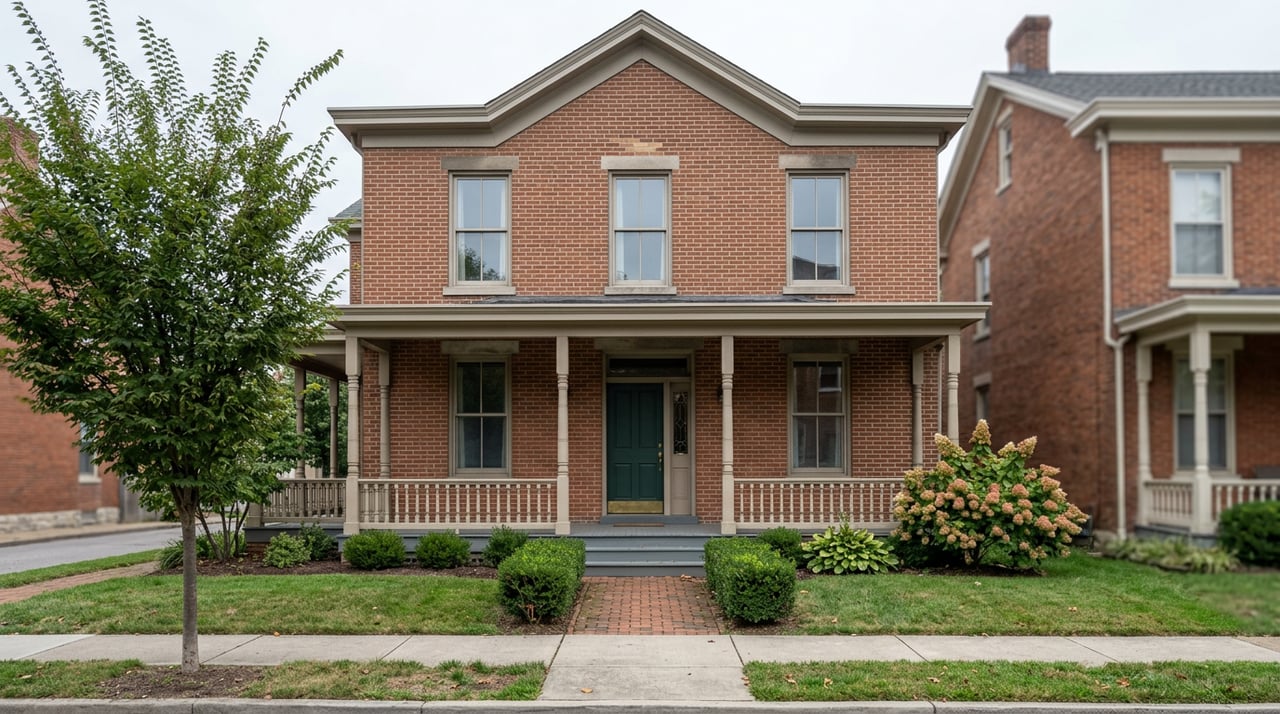
At the entry point, condos in buildings like The Modern, which sits across from Tarkington Park and a block from the Red Line, carried a median asking price around $169,000 this spring, with listings typically going under contract in about three weeks. A few blocks over, classic bungalows and vintage single-family homes along College Avenue and Carrollton Avenue, many walkable to the Monon Trail, were closing in the $400,000 to $500,000 range. At the top end sit the homes the neighborhood is best known for: the mansions along Meridian Street itself, along with larger renovated properties like the 1920s-era Broadway Manor near the Butler-Tarkington border, priced well above the neighborhood median.
That's roughly a three-fold spread in what "a home in Meridian-Kessler" means depending on which block you're standing on.
| Segment | Typical 2026 Price Range | What You're Actually Buying |
|---|---|---|
| Condo (example: The Modern) | Around $169,000 and up | Building amenities, pool and underground parking, no yard, steps to the Red Line and Tarkington Park |
| Vintage single-family bungalow | $400,000 to $500,000 | Walkable to the Monon Trail, original character, near College Avenue shops and restaurants |
| Meridian Street estate or large renovated historic home | Well above the neighborhood median | Largest lots, most architectural detail, premium address |
A median price for the whole neighborhood is trying to describe all three of these markets with one number. That's why it moves so much depending on the month.
The Real Signal: Days on Market
Here's the number that doesn't bounce around as much, and the one that tells you more about where the market actually stands. Homes in Meridian-Kessler took a median of 54 days to sell in the quarter ending March 2026, up from 32 days the year before. That's roughly a 69 percent increase in the time it takes a listing to find a buyer.
Compare that to the pace elsewhere in the metro. Indianapolis citywide, homes were selling in about 28 days over the three months ending in May 2026. Zoom out further and central Indiana's broader 16-county market posted a median of just 18 days to sell in June 2026, alongside an all-time high median price of $323,250 for the region.
So while the wider Indianapolis market has actually gotten a little faster this year, and prices region-wide keep setting records, Meridian-Kessler has slowed down noticeably. Prices are still rising here on most measures. Buyers just aren't jumping as fast to pay them.
That's not necessarily a sign of weaker demand. It reads more like buyers becoming choosier. In a historic neighborhood with wide price dispersion and a mix of condos, bungalows, and estates, buyers appear to be taking real time to compare a specific listing against others nearby rather than making an offer on the first house that fits their budget.
What the Slower Pace Means If You're Selling
A 54-day median means your home is likely to sit through more than one showing weekend before an offer comes in, even in a neighborhood where prices are technically rising. That changes the math on pricing strategy. A listing priced even a few percentage points above recent comparable closings can sit for weeks with declining showing traffic, while a precisely priced home in good condition still moves. The days-on-market number is a better early warning sign than the sale price of your neighbor's house three streets over.
It also means sellers should plan for more negotiation on the back end. Buyers with more time to shop are more likely to ask for inspection credits or repair concessions than they were a year ago, when 32-day turnaround left little room for back and forth.
What the Slower Pace Means If You're Buying
If you're comparing Meridian-Kessler to a faster-moving suburb, the longer timeline works in your favor. You have more room to see multiple properties, get a second opinion on a home inspection, and negotiate terms that a hotter market wouldn't allow.
The bigger decision point is probably the price tier question, not the timing question. A condo at The Modern and a bungalow near the Monon Trail are both "Meridian-Kessler," but they represent different budgets, different maintenance obligations, and different daily routines. Deciding which segment fits your situation matters more than trying to time a market that, as the conflicting price reports show, doesn't move in one clean direction anyway.
The Neighborhood Behind the Numbers
None of these price swings happen in a vacuum. The Meridian-Kessler Neighborhood Association has run the area's home tour for decades, and over the past 20 years the event has raised more than $425,000 for local projects through its Vi Walker Community Grant Program, funding everything from school improvements to support for local agencies. This year's tour runs September 25 through 27.
Earlier in 2026, the neighborhood also hosted the annual Decorators' Show House and Gardens, staged this year in a 1930 Tudor known as the Manor on Meridian, with proceeds supporting St. Margaret's Hospital Guild's work with Eskenazi Health. Events like these don't show up in a median price calculation, but they're part of why buyers are often willing to wait months for the right house here instead of settling for whatever's available elsewhere at a similar price point.
Frequently Asked Questions
Is Meridian-Kessler a buyer's market or a seller's market right now? Prices are still trending upward on most measures, which favors sellers, but the jump in days on market from 32 to 54 gives buyers more leverage to negotiate than the price headline alone suggests. It's a market that rewards patience on both sides.
Why do different websites show different median home prices for the same neighborhood? Meridian-Kessler has a small number of monthly sales spread across a wide price range, from sub-$200,000 condos to the neighborhood's priciest historic estates. Different tracking windows, whether three months or twelve, and different points in that range selling in a given period, produce genuinely different medians even when both are calculated correctly.
What does a condo actually cost here compared to a single-family home? This spring, condo listings in the neighborhood carried a median asking price near $169,000, while single-family resales were landing closer to $475,000 to $483,000. That gap reflects two different products, not two different neighborhoods.
If you're weighing a move into Meridian-Kessler, or trying to figure out what a listing near you is really worth in a market that won't give you one clean number, The O'Connor Team has spent decades reading exactly this kind of data for Indianapolis buyers and sellers. Get in touch and we'll walk through what the numbers mean for your specific street, not just the neighborhood average.